
Blogs, Business & Human Rights, Events
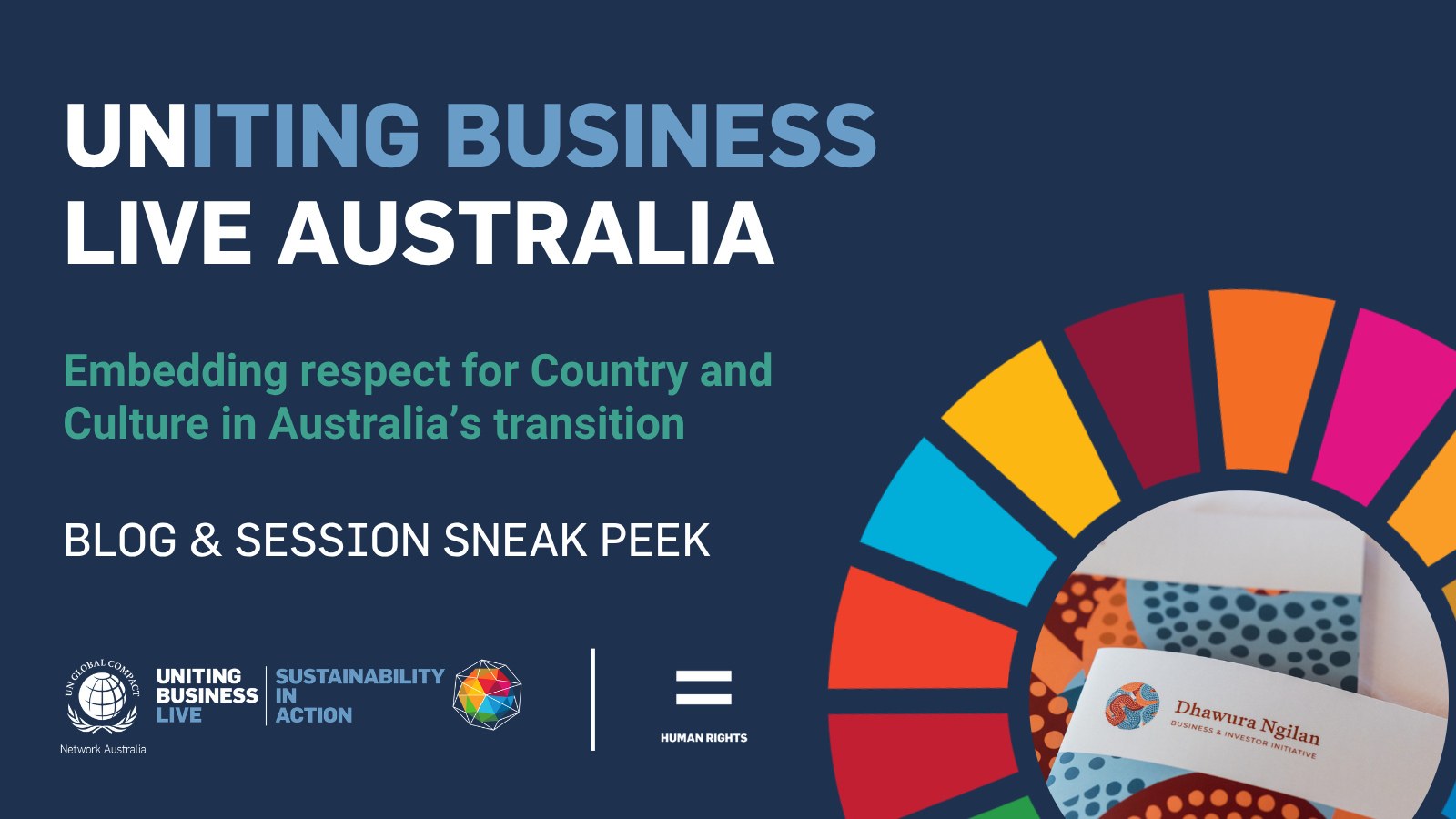
Embedding respect for Country and Culture in Australia’s transition
Catie Shavin | April 23, 2026
The most important transition questions are not only about what gets built, but where, how and with whose voices at the centre.
Embedding respect for Country and Culture
The transition to a more resilient, just and sustainable economy is reshaping how governments, investors and businesses around the world respond to the climate and nature crises and plan for the future.
COP30 reinforced the global importance of Indigenous leadership in climate action and delivered historic land-tenure commitments and a pledge to support Indigenous land rights and stewardship. Further, five indicators focused on respect for cultural heritage have been included in the Global Goal on Adaptation, highlighting the importance of Indigenous, Traditional and other local knowledges. We expect COP31 to build on these advances.
In Australia, the transition is often framed as a matter of climate ambition and economic transformation, but it is also deeply shaped by place, relationships and community.
As a result, decisions about projects, land use, operations and supply chains can have significant consequences for cultural heritage, community trust and the legitimacy of business action. For example, a renewable energy project that proceeds without genuine engagement with Traditional Owners may damage or disrupt areas of cultural significance, even where the project delivers clear climate benefits. In the same way, a company employing nature-based solutions, such as a large-scale carbon farming or reforestation project, may undermine community trust if it treats land only as an environmental asset and fails to account for cultural connection and community-led decision making.
Respect for Country and Culture can no longer be treated as a secondary consideration or a communications issue. It must be embedded in how organisations govern transition, shape strategy, manage operations and assess risk.
When cultural heritage is considered too late, too narrowly or only as a compliance issue, organisations increase the risk of harm and loss of trust with communities and other stakeholders.
A credible approach to the transition requires businesses to recognise that cultural heritage is not peripheral to decision-making. It is central to the quality and legitimacy of that decision-making from the outset.
This context challenges Australian businesses to consider carefully what credible and respectful transition planning and action looks like in practice.
Two questions that can guide business approaches include:
- Where do transition planning and cultural heritage intersect; and
- What actions can businesses take to embed – meaningfully – respect for cultural heritage into governance, strategy, operations and risk management?
Respect for cultural heritage must be embedded across the organisation
If cultural heritage is to be taken seriously in the context of transition, it cannot sit only within the external affairs or community engagement of an organisation. It must be embedded across the organisation’s core systems of governance and decision-making, including board and executive oversight, strategic planning, project design, operational practice, due diligence and risk frameworks.
A practical framework to support businesses and investors
The Dhawura Ngilan Principles and supporting guidance provide a practical approach that supports businesses across a broad range of sectors, as well as investors, to embed First Nations-led cultural heritage standards into governance, strategy, operations and due diligence.
The Principles set out twenty interconnected standards across six pillars:
- Respect and self-determination
- Collaboration and consent
- Truth and holistic heritage
- Caring for Country and Culture
- Supporting First Nations prosperity; and
- Advocacy and leadership.
The Principles are accompanied by an Implementation Guide, which helps businesses translate those principles into practice.
A framework like Dhawura Ngilan helps move the conversation beyond aspiration. It prompts businesses and investors to ask harder questions about how cultural heritage is being considered in project governance, operational planning and risk management, and whether current approaches are genuinely aligned with First Nations-led expectations.
From commitment to implementation
As investment in the transition accelerates, so too are expectations from government, business partners, consumers and other stakeholders about the action’s businesses are taking to protect cultural heritage is being protected. Businesses can position themselves to meet heightened expectations by taking proactive measures to integrate respect for Country and Culture in project governance, risk management and other transition-related decision-making.
Getting cultural heritage right is both a responsibility and an opportunity for business.
A credible transition must account for impacts on Country and Culture alongside other strategic and operational risks.
This does not mean reducing cultural heritage to a risk category alone. It means recognising that respectful engagement, stronger governance and First Nations-led standards can improve decision-making and support more accountable long-term action.
These issues will be explored during our Day 1 session, Embedding respect for Country and Culture in Australia’s transition, at UNiting Business LIVE Australia 2026. During this session attendees will hear directly from businesses taking steps to implement the Dhawura Ngilan principles and have an opportunity to consider opportunities to advance efforts to embed respect for Country and Culture in climate action and transition planning.
*Authors: Jack Love, Business and Human Rights Intern; Catie Shavin, Head of Business and Human Rights; Julia Bourke, Senior Coordinator, Programs.
UNiting Business LIVE Australia 2026
In 2026, Australia will take centre stage globally as it assumes the Presidency for Negotiations at COP31, placing Australian business at the heart of international climate decision-making. As governments set the direction, the private sector will be critical in turning ambition into action—on climate, nature and resilience.
UNiting Business LIVE Australia is a key platform for shaping business priorities ahead of COP31, aligning leadership with global goals, and ensuring Australian business voices drive credible, solutions-focused outcomes.


article by
Catie Shavin
Catie is a trusted independent advisor who works with businesses and other organisations to strengthen business respect for human rights and support a just transition to a sustainable world. For the past 16 years, Catie has been immersed in the business and human rights field in Australia and at a global level. Catie brings extensive experience leading programs and initiatives that support peer learning to strengthen business practices and approaches, collaboration to address complex challenges and leadership to help shape key legal and policy developments. Catie is admitted to legal practice in Australia and holds a Master of Laws and a Postgraduate Certificate in Poverty Reduction: Policy and Practice.